Where can you sell an old ticket stub
Four auction houses account for almost every public ticket stub sale on record. They are not interchangeable, and the right one depends on what you are holding.
18 Aug 2026
If your stub is worth real money, it sells at auction, and in practice that means Heritage Auctions, Goldin, Fanatics Collect or Lelands. Those four account for essentially every public ticket stub sale on our records. We track 19,263 graded ticket sales in all, and 7,202 of those are stubs, which is the set this page is about. Heritage has handled the most and holds the record at $480,000. If your stub is worth a few tens of dollars, none of them will want it, and that is worth knowing before you spend a fortnight on paperwork.
The four houses, side by side
| Auction house | Stub sales | Middle price | Top 10% above | Highest sale |
|---|---|---|---|---|
| Heritage Auctions | 2,878 | $628 | $5,400 | $480,000 |
| Goldin | 2,872 | $361 | $3,600 | $366,000 |
| Fanatics Collect | 1,127 | $91 | $720 | $28,800 |
| Lelands | 324 | $874 | $7,167 | $137,521 |
Read that table carefully, because the obvious conclusion from it is wrong. Lelands has the highest middle price, but that does not mean Lelands gets you more for the same stub. It means Lelands takes fewer, more expensive consignments. Fanatics has the lowest middle price because it runs high volume weekly auctions full of inexpensive material. The middle price of a house is mostly a description of what it accepts, not of what it can achieve.
What the table actually tells you
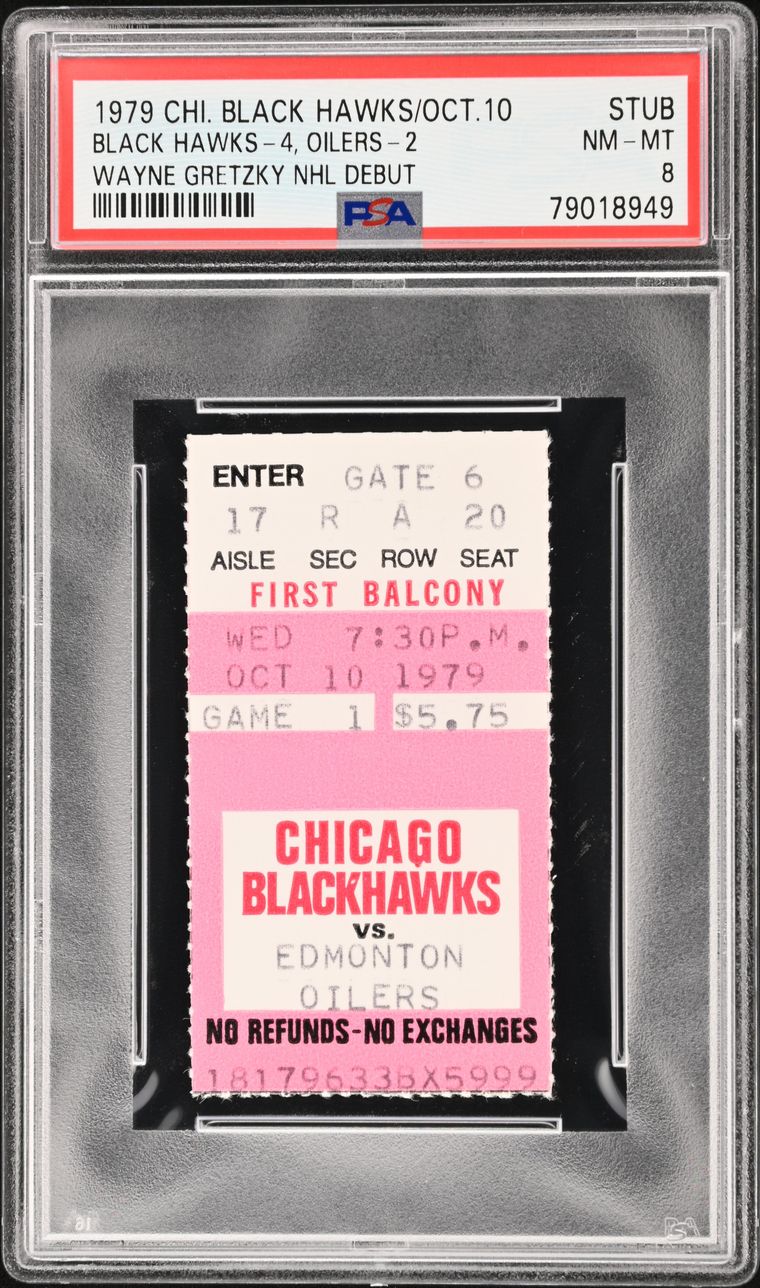
The useful signal is at the top end, not the middle. Heritage and Goldin are where the six-figure results happen: between them they account for both of the two highest ticket stub prices ever recorded publicly. Lelands sells the fewest stubs but 7.7% of them clear $10,000, the highest proportion of the four. Fanatics clears $10,000 on 0.5% of its stub sales.
| If you have | Start with |
|---|---|
| A stub from a famous debut, record or final, in any condition | Heritage or Goldin. This is exactly what their headline auctions are built around |
| A good stub from a notable game, likely four figures | Any of the four. Ask two for an estimate and compare |
| An ordinary game, likely two or three figures | Fanatics Collect, or sell it yourself. A major house may decline it |
| No idea which of these you have | Look the date up first. It costs nothing and it settles the question |
Get it graded first, and be honest about why
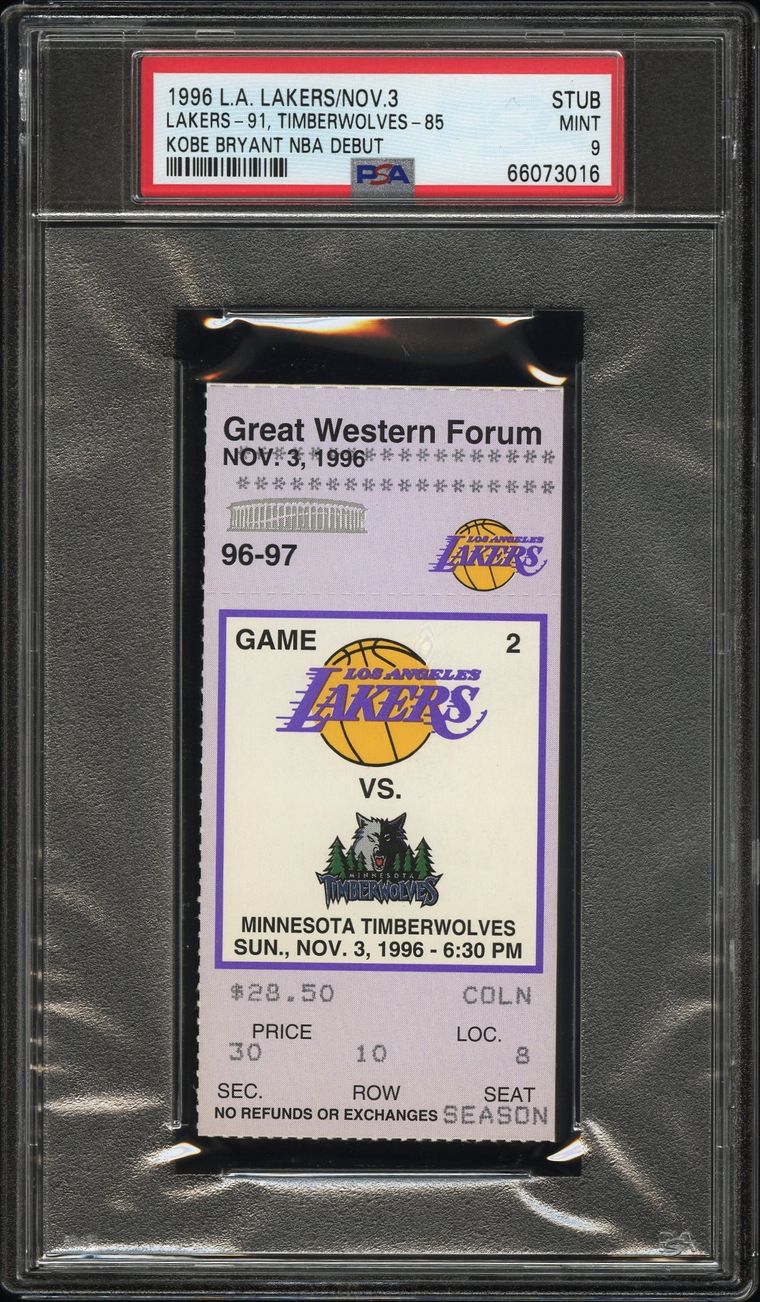
Every single price in this post is a sale of a graded stub, one that has been sent to PSA, authenticated, given a condition grade out of 10 and sealed in a labelled holder. That is not a coincidence in our data, it is what the market for valuable stubs looks like. The buyers bidding five and six figures are not bidding on a photograph of a piece of card and a promise.
Here is the part most articles will not tell you. We hold no public sales of ungraded stubs at all, so we cannot tell you what grading adds, and we are not going to invent a multiple for you. What we can say is that the route to the prices in the table above runs through a grader, and that a major house will often ask you to grade before they will catalogue it.
Grading is also the point at which a stub becomes comparable. Once yours carries a grade, it sits alongside every other copy at that grade, and both you and the buyer can see what those copies have sold for.
What selling at auction actually involves
You consign the stub, the house catalogues and photographs it, and it runs in a themed sale weeks or months later. You are paid after the buyer pays, so the whole cycle commonly runs to three or four months. The prices in this post all include the buyer's premium, the percentage added on top of the winning bid, so the figure a seller receives is lower than the figure you see published.
Sellers pay a consignment commission out of the proceeds. It varies by house and by lot value, and on a genuinely valuable stub it is negotiable, sometimes down to zero. Ask. The worst outcome is that they say no.
Selling it yourself
For a stub worth less than a few hundred dollars, an auction house is usually not interested and the commission would eat the result anyway. Selling privately is reasonable. Just price it off completed sales rather than the optimistic numbers you will see on open listings, which is a trap worth understanding properly before you either buy or sell. See why a listing price tells you nothing.
Common questions
- Where is the best place to sell an old ticket stub?
- For a valuable stub, Heritage Auctions or Goldin. Between them they account for the two highest recorded ticket stub prices and the majority of the 7,202 stub sales in our archive of 19,263 graded ticket sales. For an inexpensive stub, Fanatics Collect or a private sale.
- Which auction house sells the most ticket stubs?
- Heritage, with 2,878 of the 7,202 graded stub sales on our records, just ahead of Goldin on 2,872.
- Should I get my ticket stub graded before selling it?
- If it is potentially valuable, yes. Every public stub sale we hold is of a graded stub, and major houses often ask for a grade before cataloguing. We hold no ungraded sales, so we cannot tell you the exact difference it makes.
- How much does an auction house take?
- Sellers pay a consignment commission from the proceeds, which varies by house and by lot value and is negotiable on valuable items. Buyers separately pay a premium on top of the winning bid, which is included in every price quoted here.
- How long does it take to sell a ticket stub at auction?
- Commonly three to four months from consigning to being paid, because lots are held for the next themed sale and payment follows the buyer settling.