Why your stub is not worth what the eBay listing says
A price someone is asking is an opinion. A price someone paid is a fact. The gap between the two is where most bad valuations come from.
18 Aug 2026
Anyone can ask any price for anything. I could list a pencil at $50,000 and it would tell you nothing about pencils. The only number worth anything is what somebody actually paid, and even that moves around more than people expect: across 334 individual stubs that sold more than once, the same physical ticket typically fetched 1.6 times more on one occasion than another, and 58% of them moved by more than half.
A listing is a hope, not a valuation
When you search your ticket and see one listed at $4,000, you have learned exactly one thing: somebody would like $4,000 for it. There is no check on that number. It costs nothing to list high and wait, so plenty of people do, and a stub can sit at an optimistic price for years while looking, to anyone searching, like evidence of what these are worth.
This is worse for ticket stubs than for most collectables, because so few of any given ticket exist. With no steady flow of sales to anchor against, one hopeful listing can be the only number a searcher ever sees.
We should be straight about our own limits here. We do not track asking prices at all. Every figure on this site is a completed public auction sale with the buyer's premium included. So we cannot tell you how far above sold prices the typical listing sits, and we are not going to guess at it.
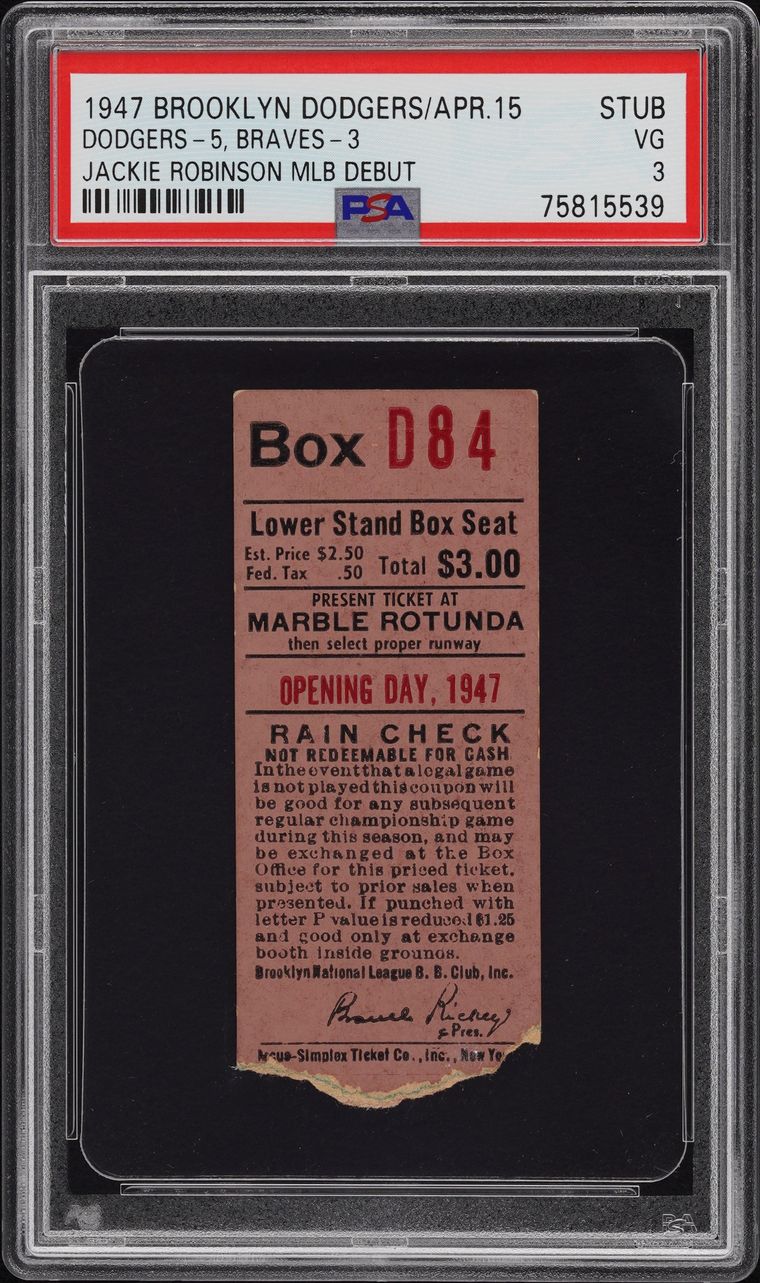
Even real sold prices are a range
Here is the thing people find hardest to accept. Sold data does not give you a price either. It gives you a range, and for ticket stubs that range is wide.
Take the 62 moments where we hold five or more recorded sales of the same ticket. Comparing the highest sale to the lowest for each one, the typical gap is 5.3 times. For the widest tenth of them it is more than 17 times. Same ticket, same market, different days.
You might reasonably assume that is just condition, with the good copies at the top and the battered ones at the bottom. It is not, or at least not mostly. When you follow the same slab, the same physical ticket with the same certification number, selling more than once, it still moves:
| Following one stub through repeat sales | Result |
|---|---|
| Stubs we have recorded selling two or more times | 334 |
| Typical gap between that stub's best and worst result | 1.6x |
| Share that moved by more than 50% | 58% |
Nothing about the ticket changed between those sales. What changed was which auction it landed in, who happened to be bidding that week, and whether two people wanted it at the same time. That is what a thin market looks like.
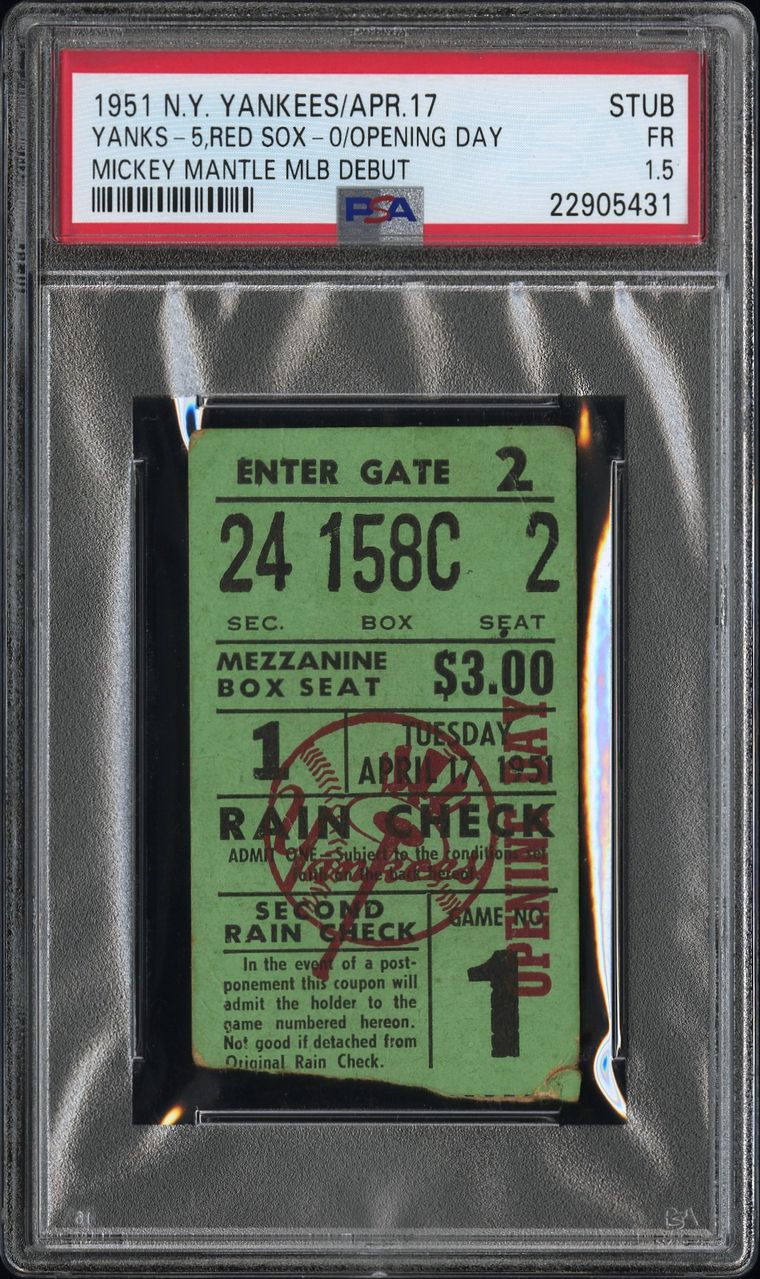
How to read comps properly
None of this makes valuation hopeless. It means you should be looking for a band rather than a figure, and you should be strict about what you compare against.
| Match on | Why |
|---|---|
| The same moment | Not the same team or the same season. Two tickets from the same month can be worth a hundred times different amounts |
| The same form | A full unripped ticket, a stub and a pass are three different things and price differently |
| A comparable grade | Within one ticket, a higher grade sold higher in 63% of comparisons, typically 29% more |
| Recent sales, and more than one | A single result is an anecdote. Three results tell you where the band sits |
Then treat the answer as a range and expect the real result to land anywhere inside it. If you are selling, that is the honest expectation to set. If you are buying, the bottom of the range is a reminder that patience is worth money.
Where to get the sold numbers
That is what this site is for. Enter the date printed on your stub, pick your game, and you get every public auction sale we have on record for that exact ticket, broken down by grade, with the date of each sale and a link to the original listing so you can check us. No asking prices, no estimates, no valuations we made up.
For the wider picture of where stub prices actually sit, the middle price across 7,202 stub sales is $407, and seven in ten sell for under $1,000. If a listing you are looking at is far outside that, it is worth asking why before you believe it.
Common questions
- Why is my ticket stub not selling for the listed price I saw?
- Because a listing is only what someone is asking. There is no cost to listing high and waiting, so asking prices drift well above what stubs actually sell for. Only completed sales tell you the value.
- Are sold prices for ticket stubs reliable?
- They are the best evidence available, but they are a range rather than a figure. Across 62 tickets with five or more recorded sales, the highest result was typically 5.3 times the lowest.
- Why does the same ticket stub sell for different amounts?
- Thin markets. Among 334 stubs we have recorded selling more than once, the same physical slab typically fetched 1.6 times more on one occasion than another, and 58% moved by over half. Which auction it lands in and who is bidding that week matters.
- How do I find what a ticket stub actually sold for?
- Look up the date printed on the front on Stub Prices. You get every recorded public auction sale of that ticket by grade, each with the sale date and a link to the original listing.
- Should I price my stub off the cheapest or the dearest comparable?
- Neither. Take several recent sales of the same ticket in a comparable grade and treat the result as a band. Expect a real sale to land anywhere inside it.