How to store old ticket stubs without ruining them
Most damage to a ticket stub happens after it is found, not before. Two things cause nearly all of it, and both are easy to avoid.
18 Aug 2026
Put it in an acid-free holder and keep it out of the light. Those two moves prevent nearly all the damage that ticket stubs suffer, and both matter most for tickets printed from roughly the 1990s onwards, which are usually thermal printed and will fade to a blank rectangle if left in daylight. A rigid top loader from a card shop costs a couple of dollars and is the single best thing you can do today.
Thermal tickets fade, and it is permanent
Most modern event tickets are not printed with ink. They are thermal printed, which means the paper itself is coated with a chemical layer that darkens where a hot print head touches it. It is the same technology as a shop receipt, and it behaves the same way.
You can usually tell by feel and look. Thermal stock is slightly slick or waxy rather than matte, the print is uniformly grey-black rather than the crisp black of ink, and it often has no impression at all when you run a finger over it. If you have ever found a receipt in a coat pocket a year later and been unable to read it, you already know what happens next.
Light, heat and friction all darken or erase that coating. Sunlight is the fast route, but ordinary room light does it slowly, and a ticket left face up on a shelf for a few years will visibly lose contrast. Nothing brings it back. Once the date and the teams have faded, the stub has lost the only two things that identify it, which is the same as losing its value entirely.
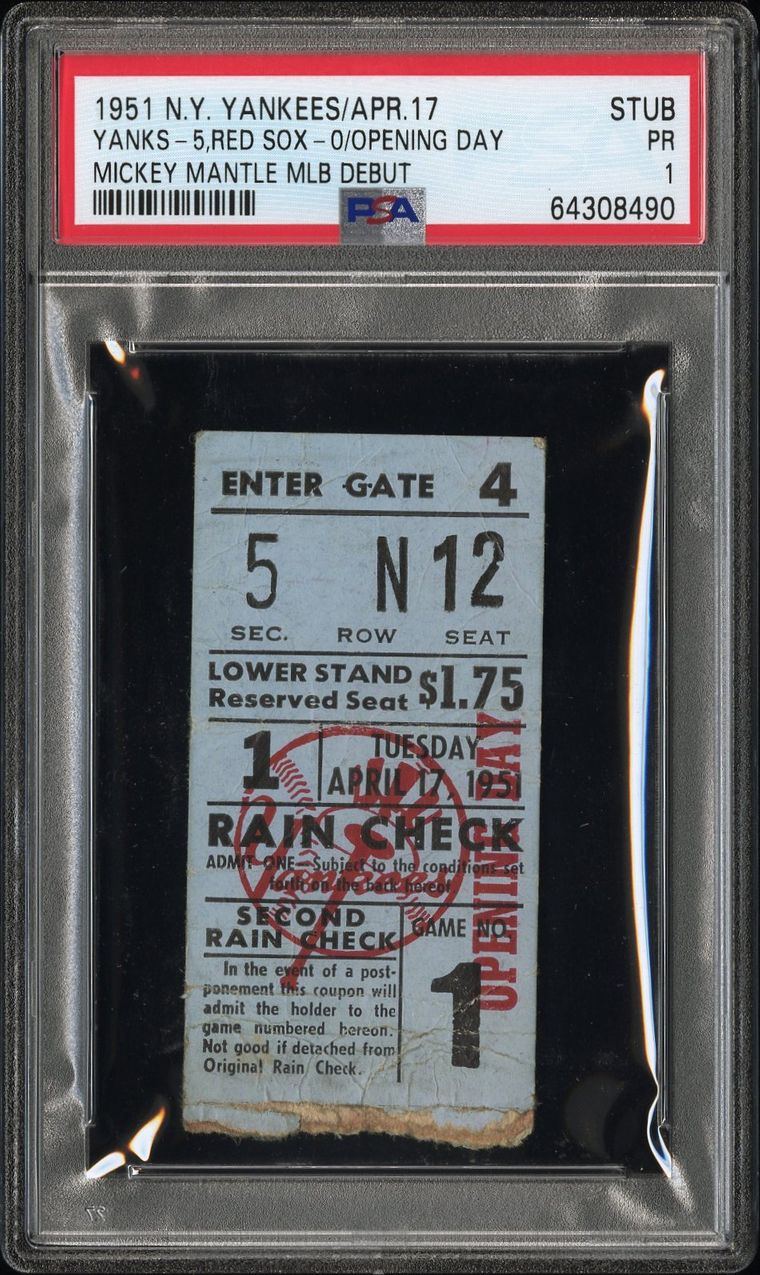
The wrong plastic is the other one
The instinct to put a stub in a wallet insert, a photo album page or an old ring binder sleeve is a good instinct badly executed. A lot of older and cheaper flexible plastic is PVC, which breaks down over time and gives off acidic by-products. Against paper that leaves yellowing, brittleness and in bad cases a sticky film on the surface.
Thermal tickets take this worse than older card, because the coating reacts to the plasticisers as well. A thermal stub stored in a soft PVC sleeve can come out with the print visibly degraded and the surface tacky.
What you want on the packaging is acid-free, and ideally also PVC-free or archival safe. Those words are not marketing on collectables supplies, they are the specification.
What to actually buy
| Use | What to look for |
|---|---|
| Everyday storage for one stub | A rigid acid-free top loader. Ultra Pro make them in photo and 4 by 6 sizes, both of which take a ticket comfortably |
| Extra protection inside that | A soft acid-free penny sleeve, so the ticket is not sliding against rigid plastic |
| Several stubs together | Acid-free pages in a binder, stored upright and closed, or an archival box |
| Where it lives | A drawer, a box or a closed binder. Somewhere dark, dry and at room temperature |
Avoid lofts and garages. The problem there is not just heat, it is the daily swing between hot and cold, which drives moisture in and out of the paper and buckles it. An interior cupboard is better than any amount of expensive packaging in a hot roof space.
Four things never to do
| Never | Because |
|---|---|
| Laminate it | It is irreversible, it seals in whatever is already on the surface, and graders treat it as an alteration. PSA catalogues laminated copies separately from clean ones |
| Trim or tidy the torn edge | A trimmed ticket is an altered ticket. It gets labelled rather than graded, and that costs far more than a scruffy tear ever would |
| Tape a tear | Adhesive stains through the paper over time and the residue cannot be removed without further damage |
| Flatten it under books | Pressing does not repair broken paper fibres, so a crease stays visible under light, and you risk offsetting ink or thermal print in the process |
That first one is not hypothetical. One of the best known stubs in the hobby, Wilt Chamberlain's 100 point game, is catalogued by PSA with "Laminated" in the item name, permanently, because somebody decided to protect it.
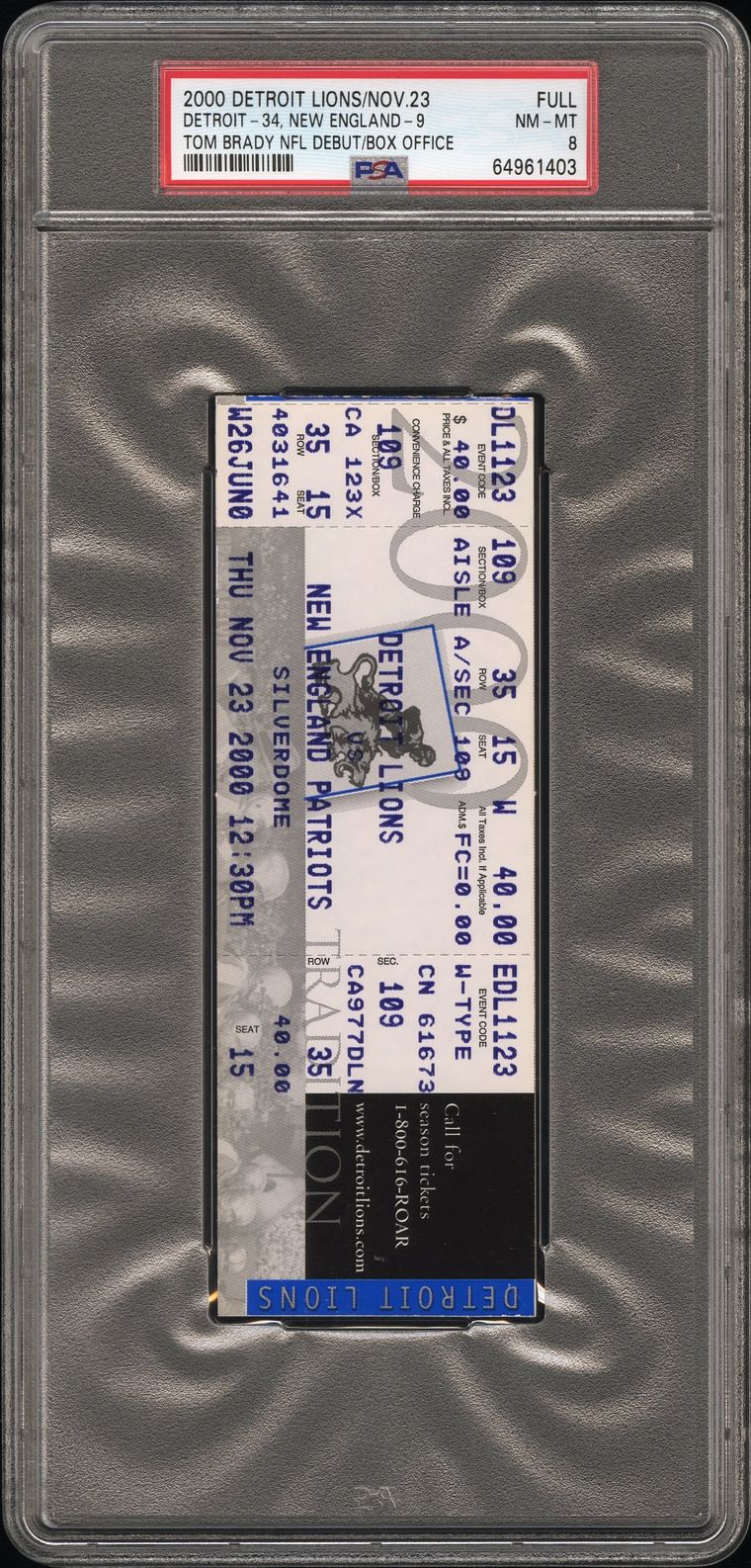
Why any of this is worth the trouble
Condition is not what decides whether a stub is worth $300 or $300,000. The day it was printed decides that. But condition decides where within that band you land, and comparing copies of the same ticket at different grades, the better graded one sold for more in 63% of 668 comparisons, typically about 29% more.
For a modern stub it matters more than that. In our population census of 8 July 2026, 32.5% of graded tickets from 2000 onwards came back at 9 or 10, and 16.5% were perfect 10s. When one in six surviving copies is flawless, a faded or creased one has nothing to offer a buyer. More on what condition is worth.
The stub you found in a drawer has already survived the hard part. Most of the damage these things suffer happens in the months after somebody rediscovers them, when they get handled, photographed, carried around and left out on a table.
Common questions
- How should I store an old ticket stub?
- In a rigid acid-free top loader, ideally with a soft acid-free sleeve inside it, kept somewhere dark, dry and at a steady room temperature. A photo sized or 4 by 6 top loader fits a ticket; a standard card one is usually too small.
- Do ticket stubs fade?
- Modern ones do, badly. Most tickets from the 1990s onwards are thermal printed, the same technology as a shop receipt, and light and heat erase the print permanently until the date and teams are unreadable.
- Is it safe to keep a ticket stub in a plastic wallet?
- Only if it is acid-free and PVC-free. Older and cheaper flexible plastic is often PVC, which breaks down and leaves paper yellowed, brittle or tacky, and it damages thermal tickets faster than plain card.
- Should I laminate a ticket stub to protect it?
- No. Lamination is irreversible and graders treat it as an alteration. PSA catalogues laminated copies separately, including the well known Wilt Chamberlain 100 point stub.
- Can I flatten a creased ticket stub?
- It will not work. Pressing does not repair broken paper fibres, so the crease still shows under light, and you risk transferring ink or thermal print in the process.