What the numbers on a graded ticket label mean
A graded ticket carries a long number, a grade, and sometimes two letters in brackets. Here is what each one is telling you, and which one you should care about.
17 Aug 2026
If someone has sent you a photo of a ticket sealed in plastic, or you have just had one back from grading, the label along the top is doing four separate jobs at once. None of them is a price, and only one of them is really about condition.
The long number is a receipt, not a rarity
The eight or nine digit number, usually at the bottom right of the label, is the certification number. It belongs to that one sealed ticket and to nothing else in the world. PSA publish a record against it showing what they graded and when, which is what makes a graded ticket easy to check and hard to fake.
It is worth being clear about what it is not, because this catches people out constantly. It is not a serial number counting how many exist, and a low one does not mean an early or a special example. It only tells you roughly when the ticket was graded, because the numbers are handed out in order. Tickets graded in the same batch sit next to each other, which is why you sometimes see two stubs from the same find with certification numbers one apart.
The grade is a number out of 10, with names attached
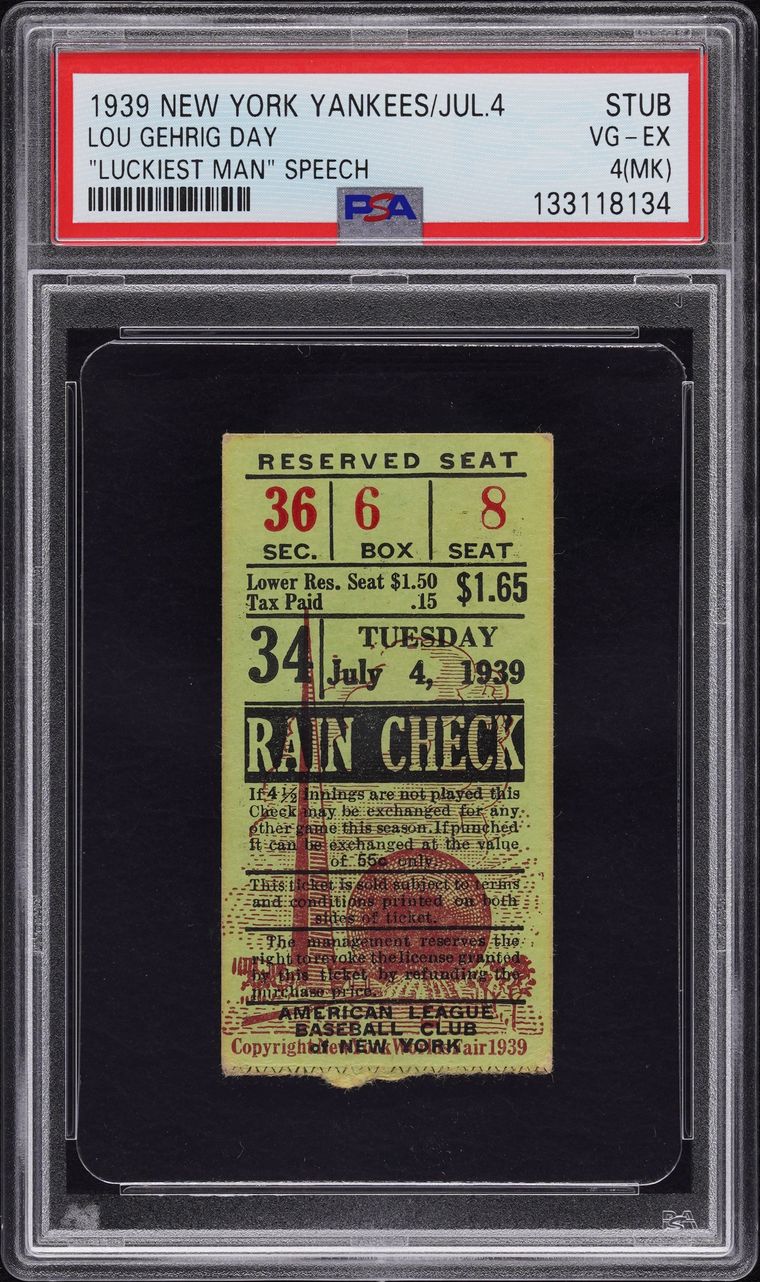
The grade runs from 1 to 10, and the label prints the name as well as the number, which is why a stub can read "VG-EX 4" rather than just "4". Both halves say the same thing.
| Grade | What the label says | Roughly what it means |
|---|---|---|
| 1 | Poor | Heavily worn, torn or damaged, but genuine and intact |
| 1.5 | Fair | Very worn, with real damage |
| 2 | Good | Well handled, rounded corners, creasing |
| 3 | VG | Visible wear, still presentable |
| 4 | VG-EX | Light creasing or soft corners |
| 5 | EX | Minor handling only |
| 6 | EX-MT | Very light wear |
| 7 | NM | Near perfect, one small flaw |
| 8 | NM-MT | Sharp, barely a mark on it |
| 9 | Mint | As printed, with a nearly invisible fault |
| 10 | Gem Mint | Flawless |
"Authentic" with no number is not a failure
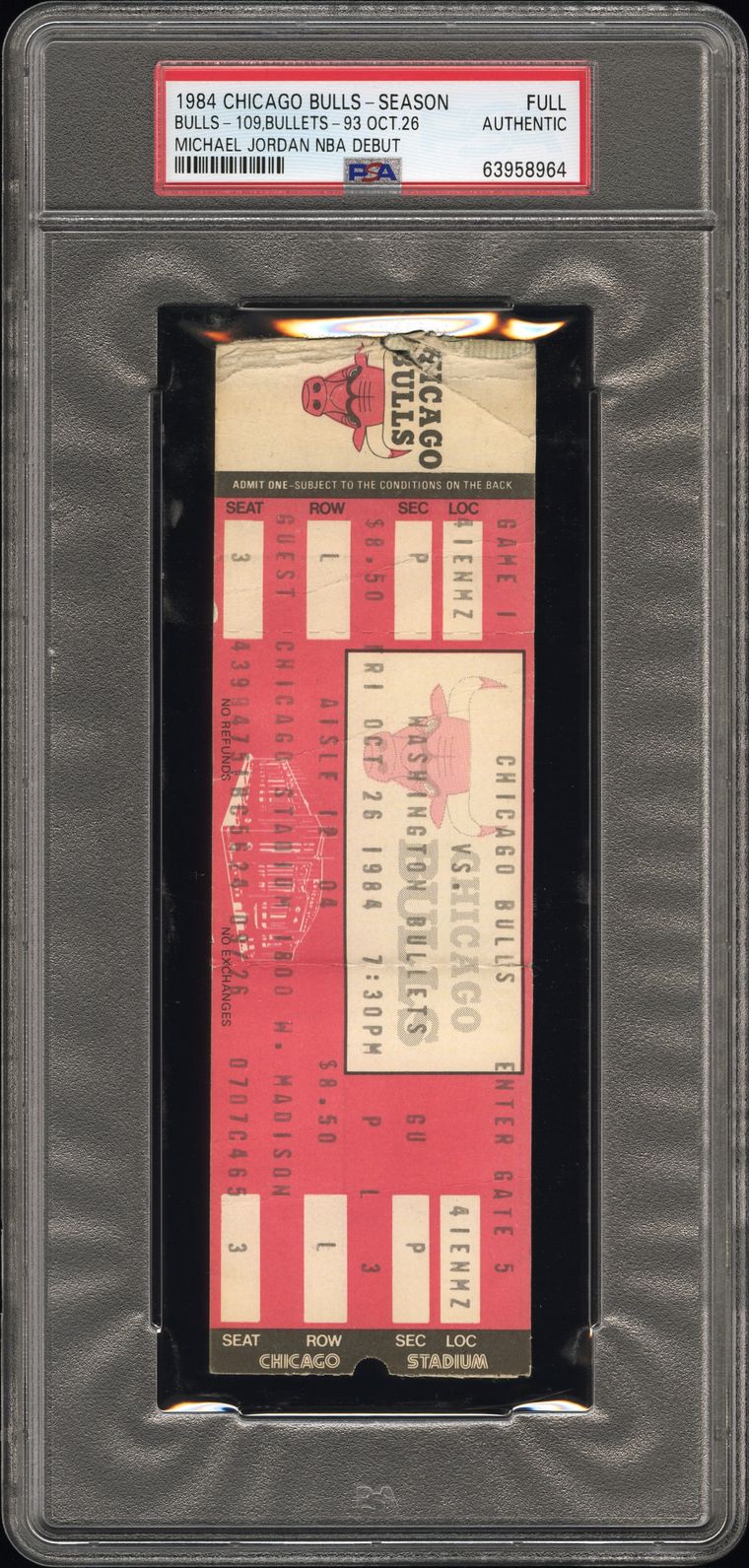
A label reading Authentic, with no grade, means PSA are satisfied the ticket is genuine but have not given it a number. That happens when something makes a numeric grade unsafe or unhelpful, and it is a normal outcome for tickets rather than a black mark.
It certainly does not cap the value. Michael Jordan's NBA debut full ticket is graded Authentic, and it sold for $468,000.
Two letters in brackets are a named flaw
A qualifier is PSA pointing at one specific problem rather than letting it drag the whole grade down. The two you will see most on tickets are MK, meaning marks such as writing or a stamp, and OC, meaning off centre. So "VG-EX 4 (MK)" reads as a 4 that has something written on it.
A qualifier usually costs money against a clean copy of the same grade. Usually, not always: the stub from Lou Gehrig's farewell speech at Yankee Stadium in 1939 carries a (MK) qualifier and sold for $280,600.
Signed tickets carry two grades
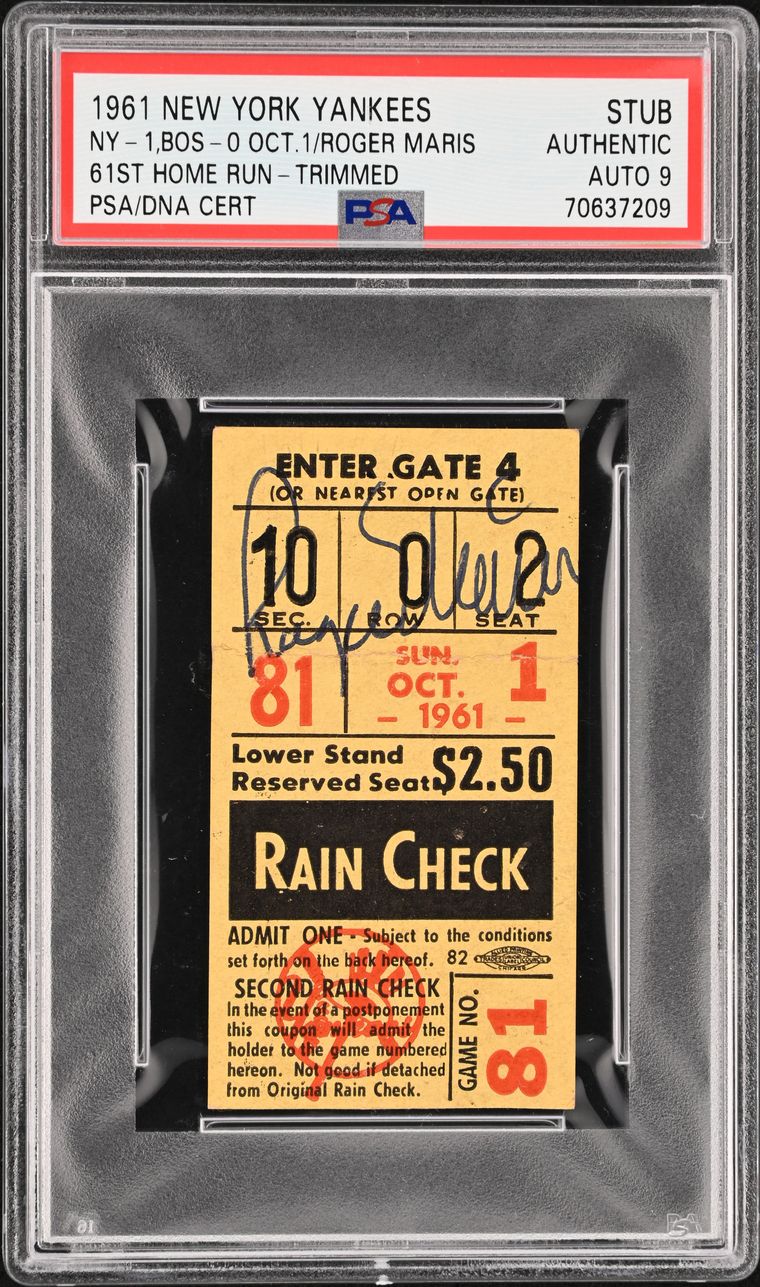
If the ticket is autographed, the label can show a grade for the ticket and a separate one for the signature, the second one from PSA/DNA. They are independent, so a battered ticket can carry a perfect autograph grade. When an auction title quotes a single number on a signed ticket, it is usually quoting whichever of the two reads better, so check which one you are looking at.
The number that actually sets the price is not on the label
Everything above describes the object. What buyers pay for is the moment, and after that, how many other copies exist at the same grade. That second figure is the population, PSA's running count of how many they have graded, and it is published separately rather than printed on the slab.
It is the number worth looking up. A grade of 8 means very little on its own and a great deal if the eight other known copies are all graded 4. Both figures sit on the price page for whatever your ticket is, alongside every recorded sale.
Common questions
- What is the long number on a PSA ticket label?
- It is the certification number, unique to that one sealed ticket. PSA publish a record against it so the grade can be checked. It does not say how many copies exist.
- What does Authentic mean on a graded ticket?
- PSA are satisfied the ticket is genuine but have not assigned a numeric grade. It is a normal result for tickets and does not cap the value: Michael Jordan's NBA debut full ticket is graded Authentic and sold for $468,000.
- What does MK mean on a PSA label?
- MK is a qualifier meaning marks, such as writing or a stamp on the ticket. It flags one specific flaw instead of lowering the overall grade.
- Is a PSA 10 ticket worth more than a PSA 8?
- Usually, but the gap depends on how many exist at each grade. A high grade only commands a premium when higher grades are genuinely scarce for that ticket.
- Why do some graded tickets have two grades?
- Autographed tickets are graded twice, once for the ticket and once for the signature by PSA/DNA. The two are independent of each other.