How to find out what game your ticket stub is from
The date on the front is the only thing on your stub that identifies the day. Everything else is shared with thousands of tickets from the same season.
18 Aug 2026
Look at the date printed on the front of your stub and type it into the calendar on our home page. We hold 23,567 separate dates, from 1827 to today, and the calendar will show you every game we have a record of on the day yours was printed. That takes about ten seconds. Working out whether the day mattered takes a bit longer, and that is what the rest of this page is for.
Start with the date, not the team
It is tempting to start with the club, the stadium or the seat number. None of those narrow anything down. A team plays eighty or a hundred and sixty times a season and prints the same ticket design for all of them, so the team tells you almost nothing about which piece of card you are holding.
The date is different. One date is one day, and one day is one set of games. Across our whole catalogue of 72,706 dated tickets, the date narrows a stub down to a handful of possibilities almost every time.
Where the date is printed
On most tickets it is on the front, near the top or along the edge that was not torn. Older stubs often print it in an abbreviated form, so "APR. 15" with the year somewhere else on the ticket, or a year printed only on the season header. Two things to watch for:
| What you can see | What to do |
|---|---|
| A full date | Type it straight into the calendar |
| A day and month but no year | Use the season, the ticket price or the opponent to pick the year, then try each candidate |
| A game number and no date | Season ticket books number games in order. Count from the season opener |
| Nothing at all | The stub may be the wrong half. The date is usually on the part that stayed with the holder |
What the calendar gives you back
Enter a date and you get every moment we hold from that day, each one labelled with the teams and the final score. Pick the one that matches your stub. Take 10 October 1979: that date holds a Baltimore World Series game, a couple of routine NHL fixtures, and Wayne Gretzky's first NHL game. Three very different tickets, one day, and only the teams on your stub tell you which is yours.
The part we cannot do for you
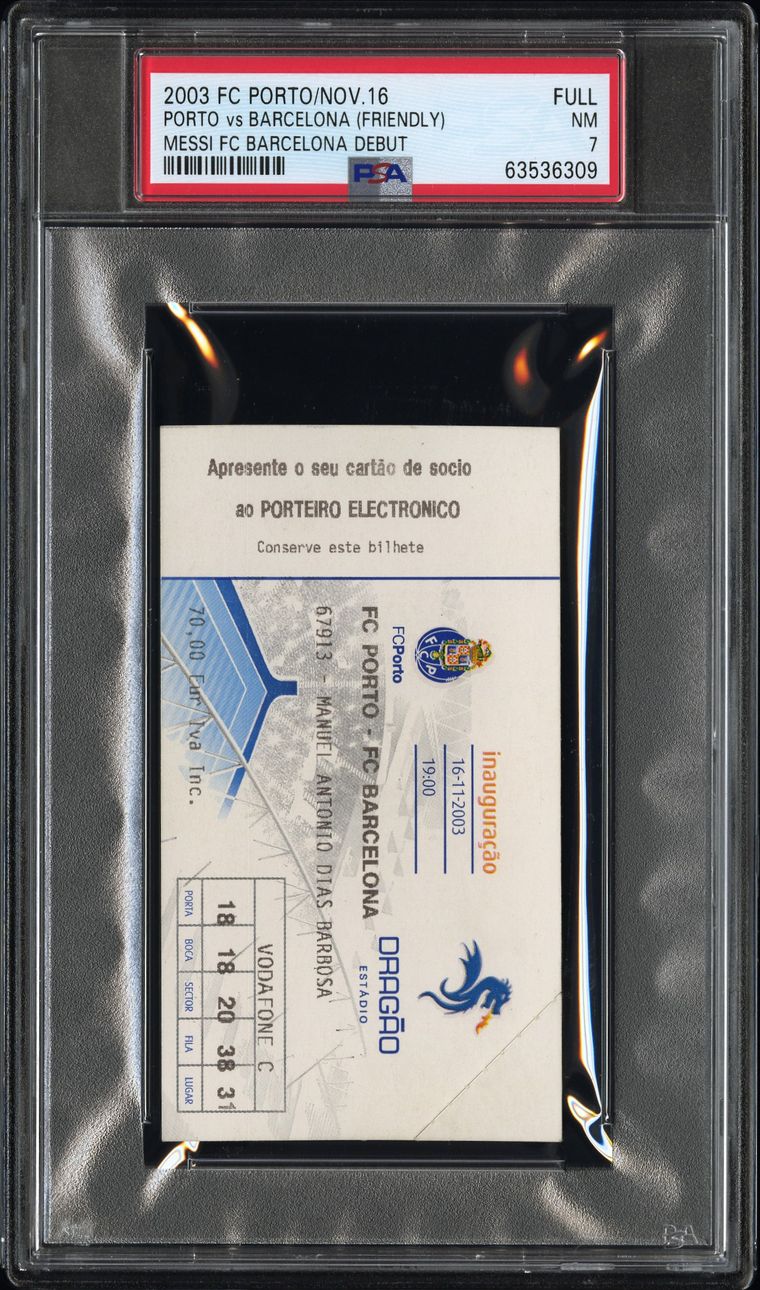
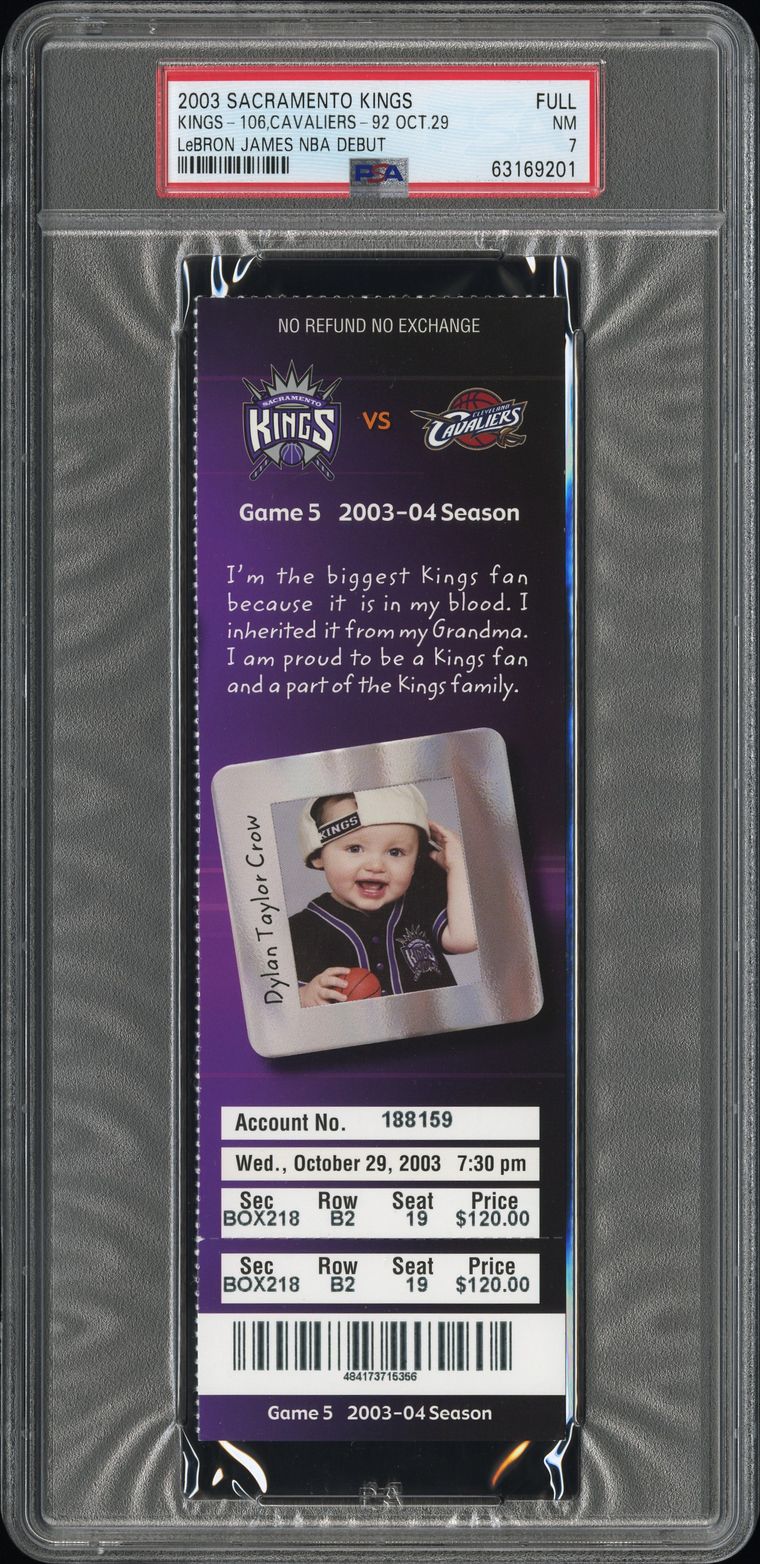
Our records come from the way tickets are catalogued, which means they usually print the scoreline and not the meaning. "Bulls-109, Bullets-93" is a line of numbers. It is also Michael Jordan's first NBA game. You are the one who has to make that connection, and it is worth making, because that connection is where nearly all the money is.
| The date | How it is catalogued | What actually happened | Top sale |
|---|---|---|---|
| 15 Apr 1947 | Dodgers-5, Braves-3 | Jackie Robinson's first MLB game | $480,000 |
| 26 Oct 1984 | Bulls-109, Bullets-93 | Michael Jordan's first NBA game | $341,600 |
| 4 Jul 1939 | Lou Gehrig Day | The "luckiest man" speech | $280,600 |
| 10 Oct 1979 | Black Hawks-4, Oilers-2 | Wayne Gretzky's first NHL game | $158,600 |
| 2 Mar 1962 | Warriors-169, Knicks-147 | Wilt Chamberlain scores 100 | $137,521 |
| 9 Oct 1919 | Reds-10, White Sox-5 | The fixed World Series | $58,560 |
If the middle column of that table looks like your stub, search the teams and the date together and see what comes back. Debuts, records, final games and championship deciders are the four things worth checking for.
If your date brings nothing back
It usually means nobody has had a ticket from that day graded, which is the ordinary outcome for an ordinary game. It does not mean your stub is fake and it does not mean it is worthless, only that there is no public sale to compare it against. Most stubs are in this position, and most stubs are worth a few hundred dollars at most.
Common questions
- How do I find out what game my ticket stub is from?
- Use the date printed on the front. Enter it on the Stub Prices calendar and you will see every game we hold a record of from that day, with the teams and the final score, so you can match it to your stub.
- My ticket stub has no year on it. What now?
- Use the ticket price, the opponent or the season header to narrow it to one or two possible years, then check each date in turn. Ticket prices moved slowly, so they are a good rough guide to the decade.
- What if the date brings up several games?
- That is normal, since dozens of games are played on most dates. Match the teams printed on your stub to the ones listed and you will land on the right one.
- What if my date returns nothing at all?
- It means no ticket from that day has been graded and publicly sold, which is the usual outcome for a regular season game. It is not a sign that your stub is fake.
- Does the seat or section number help identify the game?
- No. Seat and section repeat every single game of a season, so they identify where the holder sat, not which day it was.