Is a season pass worth more than a ticket to one game
It is the one collectable that gets you into every game and is wanted for none of them. Here is what passes actually sell for next to the tickets from the same nights.
22 Aug 2026
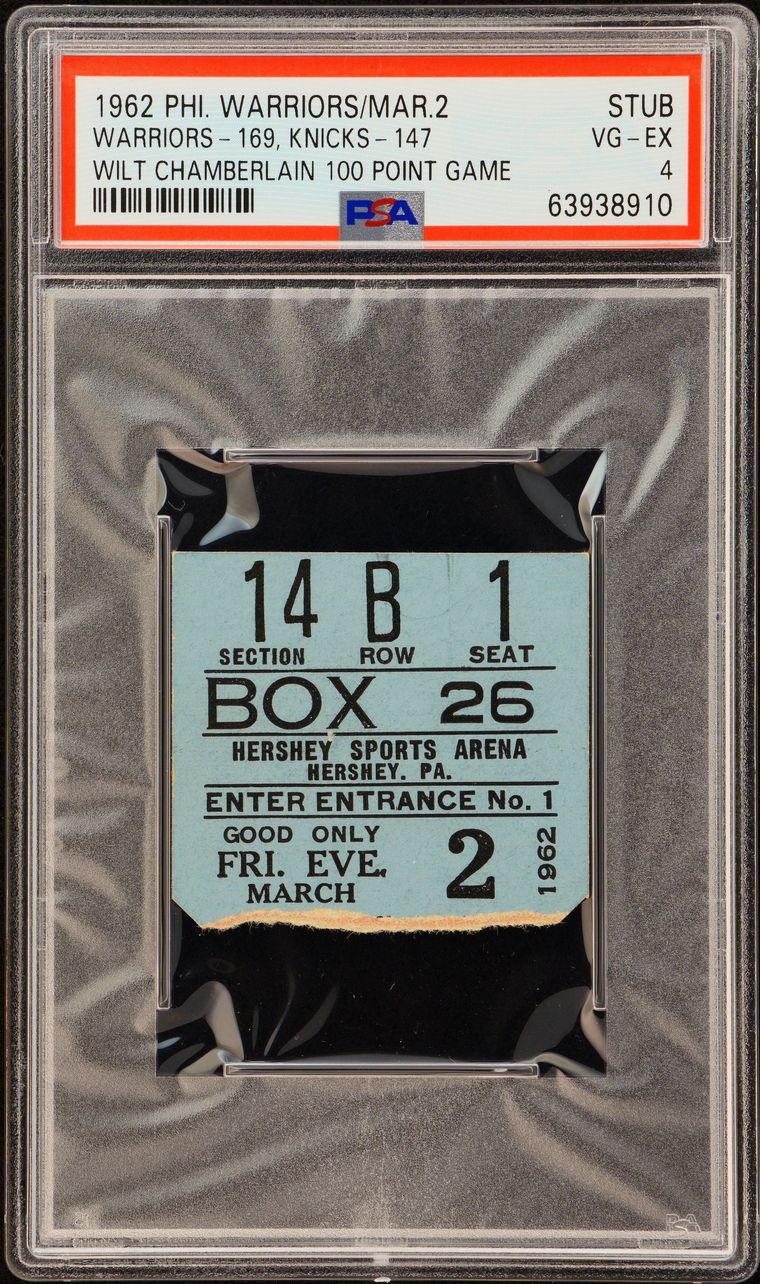
No, and usually by a wide margin. Take the 28 occasions where both a pass and a matchday ticket from the same event have sold at auction: the pass fetched less on 18 of them, and typically brought about 57 cents for every dollar the ticket brought. The gap gets brutal at the top end. A ticket stub from Wilt Chamberlain's 100 point game has a middle price of $27,403 across 22 sales. The pass that got somebody into that same night sold once, for $2,400.
A quick word on terms, because this post uses three. A ticket is what a spectator bought for one date. A stub is the torn half of that ticket, handed back at the turnstile. A pass is the season book, press credential, staff badge or VIP card that covered a run of dates rather than one. If what you have says "season" on it, or names a company rather than a seat, you are holding a pass.
What passes actually sell for
These are PSA graded sales at Heritage Auctions, Goldin, Fanatics Collect and Lelands, sold between 2005 and August 2026. Graded means the item was sent to PSA, scored from 1 to 10 and sealed in a plastic holder, which is how serious buyers trade these.
| What sold | Sales | Middle price | Usual range | Highest ever |
|---|---|---|---|---|
| Ticket stub | 6,237 | $458 | $171 to $1,320 | $480,000 |
| Full ticket | 6,795 | $336 | $134 to $900 | $468,000 |
| Pass | 424 | $317 | $134 to $674 | $31,720 |
The middle prices are close enough to argue about. The last column is not. A stub has cleared $480,000 and a full ticket $468,000, while the best pass anybody has sold made $31,720, and that one was a press pass from the 1905 World Series. In the collectable that pays life-changing money, a pass has never been the item that did it.
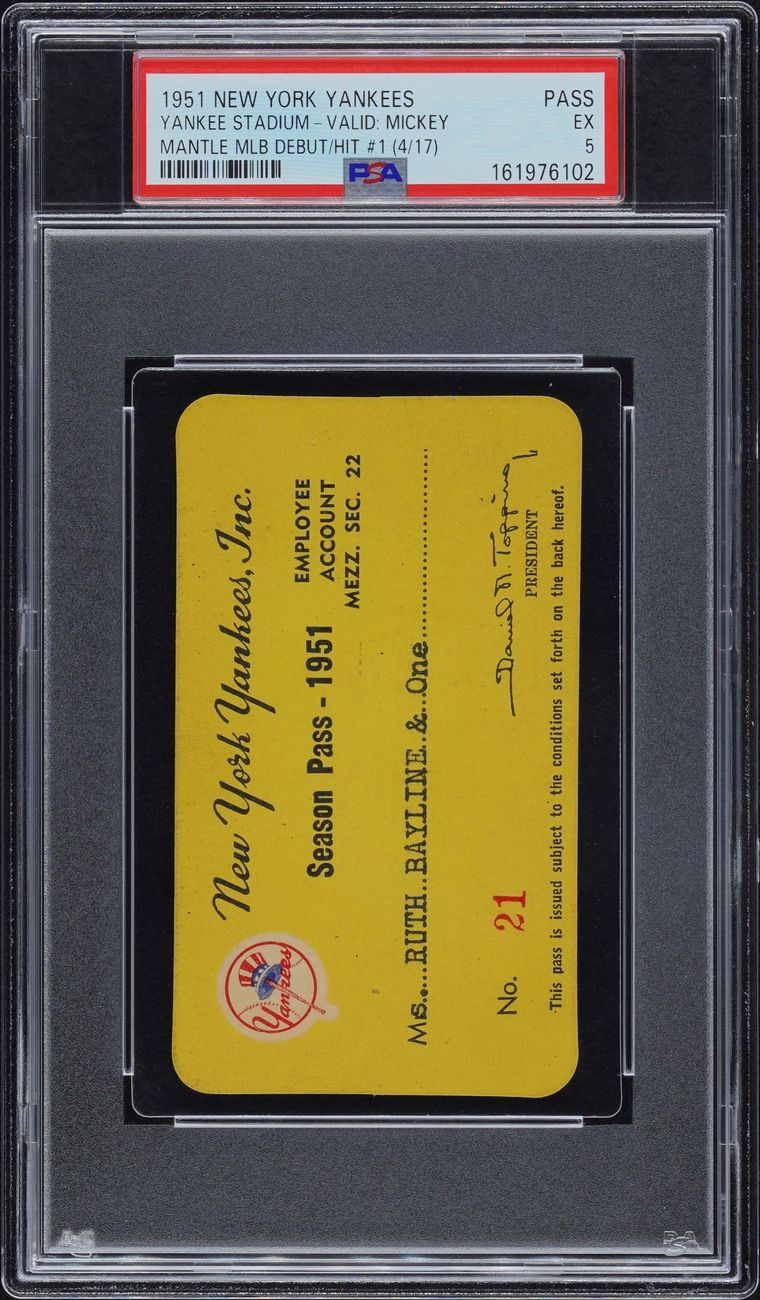
The same night, both items on sale
Comparing all passes to all tickets is unfair, because they cover different events. So here is the honest test: events where a pass and a ticket have both sold, side by side. Super Bowl I is the deepest example we hold, with 62 ticket sales and 8 pass sales.
Middle price of a ticket to the game
Middle price of a pass to the same event
| Event | Ticket sales | Middle | Pass sales | Middle |
|---|---|---|---|---|
| Super Bowl I, 1967 | 62 | $2,379 | 8 | $780 |
| Super Bowl III, 1969 | 34 | $2,505 | 2 | $508 |
| Super Bowl II, 1968 | 29 | $1,080 | 2 | $432 |
| Super Bowl IV, 1970 | 18 | $1,916 | 1 | $139 |
| Ali vs Norton, 1973 | 6 | $1,800 | 1 | $336 |
Why the pass loses
A pass does not prove you were there. That is the whole thing, in one sentence. A stub is physical evidence that one person walked through a gate on one specific day, which is why people keep them and why buyers want them. A season book that covered forty dates says its owner could have been at any of them, and probably missed a few. The buyer is not paying for admission, they are paying for the moment, and only the ticket pins itself to the moment.
There is a second reason, and it is the opposite of what you would expect. Passes survived too well. A ticket got folded into a programme, shoved in a pocket, or dropped in a bin on the way out. A season pass came in its own wallet or case, lived in a drawer, and was looked after all year because you needed it next week. So when they do turn up, they turn up clean.
| Form | Graded copies | Share graded 9 or 10 | Share graded a perfect 10 |
|---|---|---|---|
| Full ticket | 151,058 | 28.2% | 12.7% |
| Pass | 11,467 | 19.2% | 11.1% |
| Ticket stub | 111,519 | 1.5% | 0.3% |
Read the bottom row. Barely one stub in sixty-six grades a 9 or a 10, because tearing a ticket in half is not gentle. Nearly one pass in five does. So a high grade, which is the thing that multiplies the price of a stub, is ordinary on a pass. If yours grades a 9, that is lovely, and it will not do for you what a 9 does for a stub.
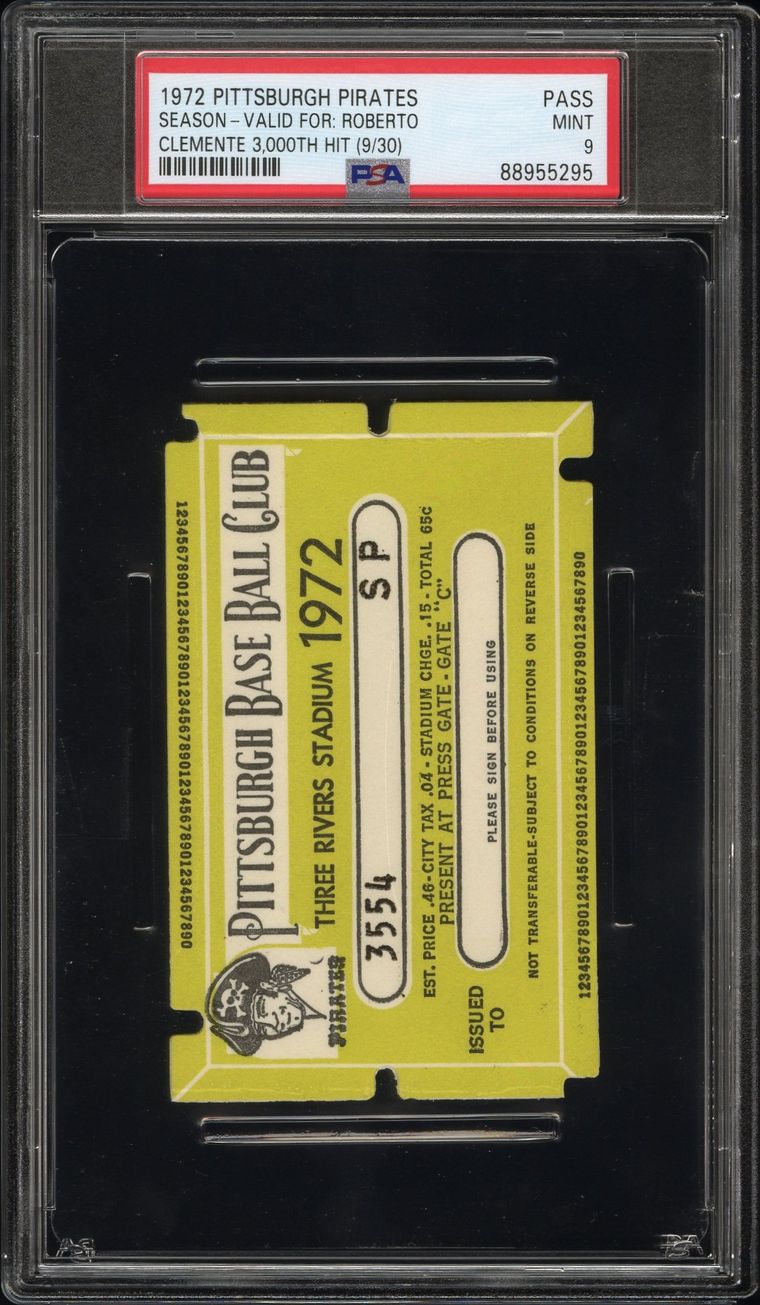
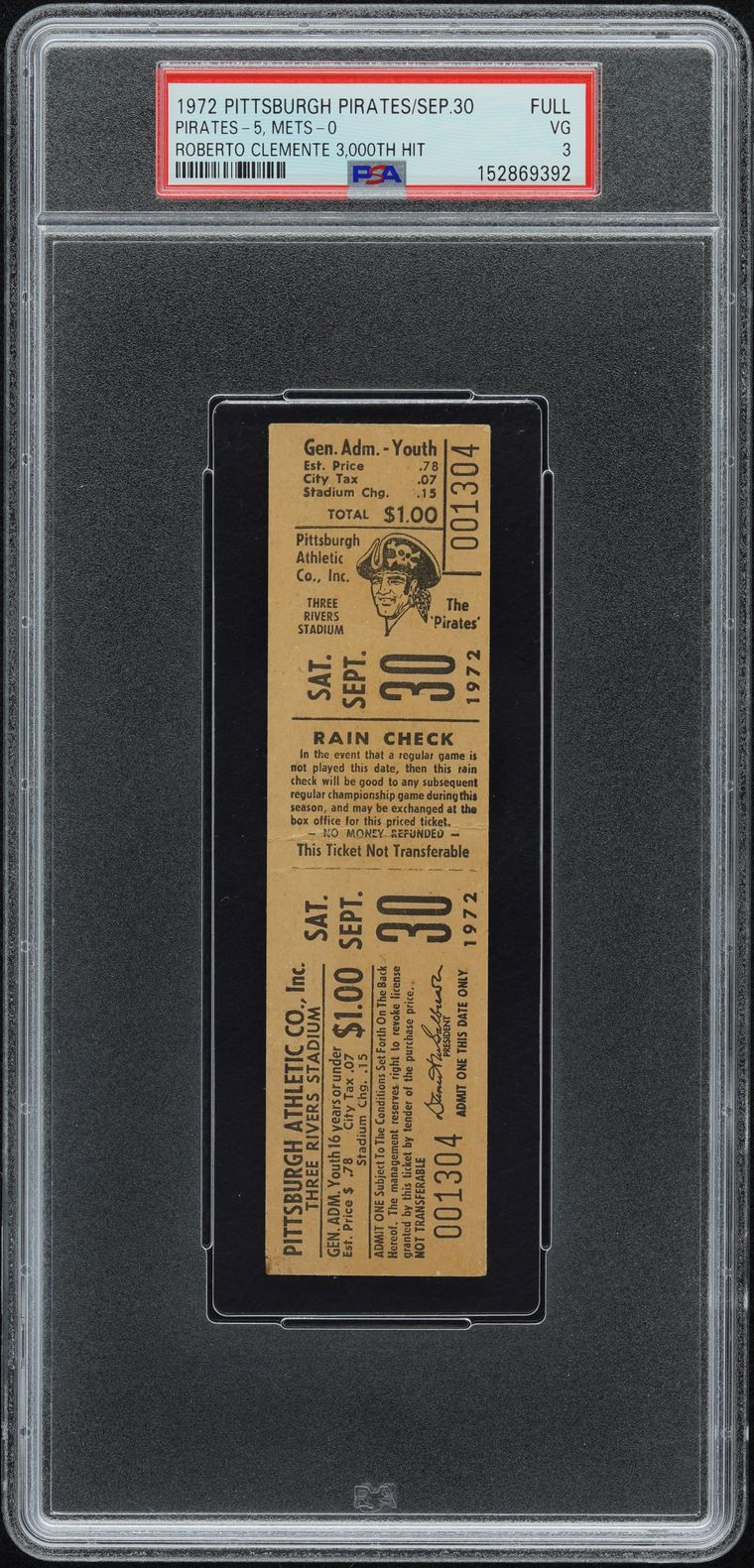
Rarer, and still cheaper
It is tempting to assume passes are cheap because there are more of them about. There are not. Across the 619 events where PSA has graded both, the pass is the scarcer item 417 times. The typical pass entry has one graded copy in existence; the typical ticket entry has five. Passes are about 4% of every graded ticket there is.
Wilt Chamberlain's 100 point game is the cleanest example of what that is worth. The pass, the Philadelphia Sports Writers card valid for that night, is the only graded copy in the world. The stub has 29 graded copies. The one-of-one sold for $2,400. The one with twenty-eight rivals has a middle price of $27,403. Scarcity does not rescue a pass, because scarcity was never the thing buyers were paying for.
If yours was never graded
Most drawer finds have never been near PSA, so here is the ungraded market. Among ticket items sold since January 2021 with no grading mentioned, a season pass or season ticket has a middle price of $39.99 across 195 sales, and a single-game stub $75.00 across 2,169. Same direction, smaller numbers, and it is roughly where most ticket paper lands. Worth knowing before you pay to have anything graded, because grading costs more than most passes are worth.
When the pass is the better thing to own
Three situations, and they are real, not consolation prizes.
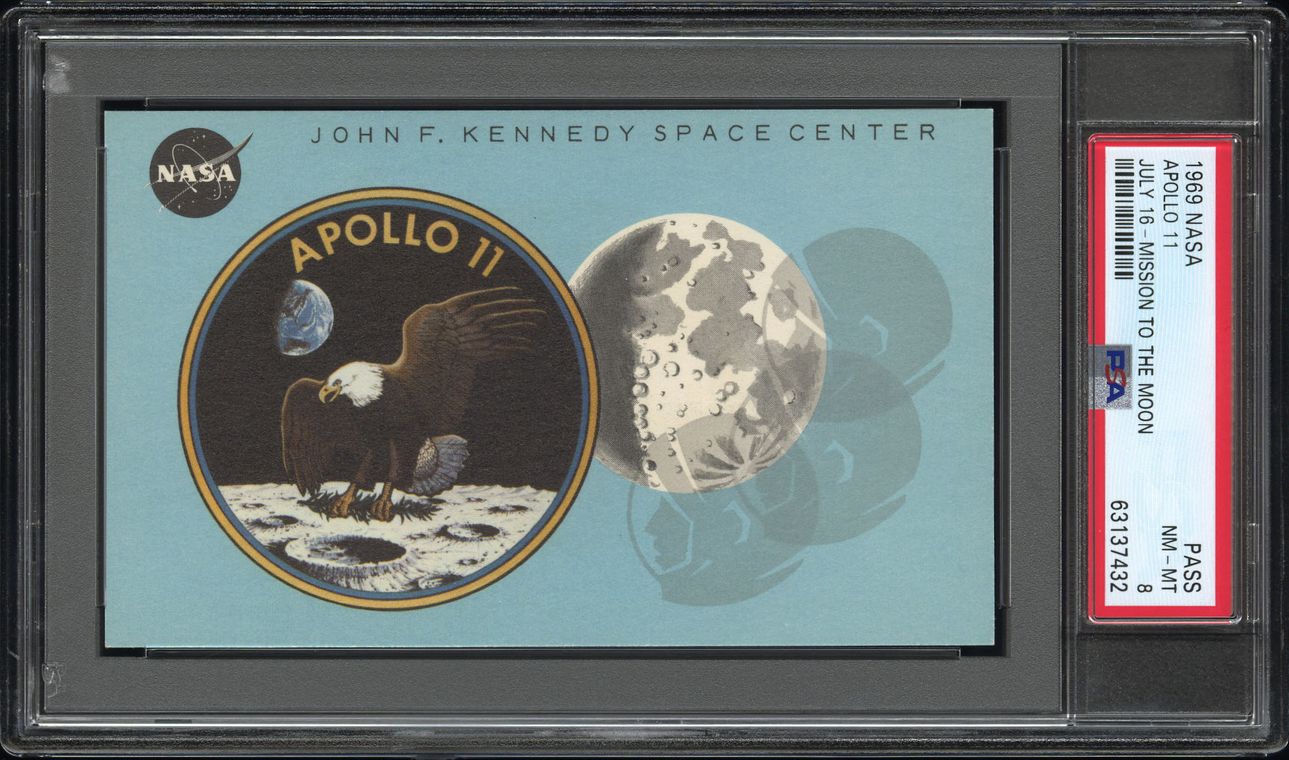
One, no ticket exists. Nobody sold seats to the moon landing. A NASA Apollo 11 pass sold for $5,280. Nobody bought a ticket to Shaquille O'Neal's Olympics as a competitor; his 1996 Atlanta athlete credential made $11,100. The 1973 Battle of the Sexes field-level pass made $9,300. Where the pass is the only paper that survives from an occasion, it carries the whole occasion.
Two, the record belonged to the season, not to one night. A 1941 Cleveland Indians pass valid during Joe DiMaggio's 56 game hitting streak sold for $2,438, comfortably ahead of the $690 middle price of stubs from streak games. When the achievement took a whole summer, the item that covered the whole summer fits it.
Three, you actually held it. A season pass sat in someone's pocket for a year. It is the object with the story attached, which is why so many of them were kept when the tickets were not. That is a real reason to own one. It is just not a reason the market pays for.
One last comparison, because it makes the rule impossible to miss. A 2007 Formula 1 season pass, valid for every circuit that year and graded a flawless perfect 10, sold for $720. A pass to one race that season, Lewis Hamilton's first, graded a scuffed 6, sold for $2,928. Same sport, same year, same kind of card. The one that names a single day is worth four times the one that names them all.
Common questions
- Is a season pass worth more than a ticket to one game?
- Usually not. Across 28 events where both a pass and a ticket have sold at auction, the pass sold for less on 18 of them, and typically fetched about 57 cents for every dollar the ticket fetched. The gap widens on famous events.
- Why is a season pass worth less than a ticket stub?
- A stub proves someone attended one specific date, which is what buyers are paying for. A pass covered many dates, so it cannot be tied to the moment. Passes also survived in far better condition, so a high grade on one is common rather than special.
- How much is an old season pass worth?
- Graded season and press passes have a middle price of $317 across 424 auction sales, with the middle half between $134 and $674. Ungraded ones sold since 2021 have a middle price of $39.99. The record for any pass is $31,720, a press pass from the 1905 World Series.
- Are season passes rarer than ticket stubs?
- Yes. Across the 619 events where PSA has graded both, the pass is the scarcer item 417 times, and passes are only about 4% of all graded tickets. Being rarer has not made them more valuable.
- Is my season pass worth grading?
- Usually not on its own. Most passes sell for less than the cost of grading and shipping. It is worth considering if the pass covers a genuinely famous event, or if it is the only surviving item from an occasion that never had public tickets.