Are old ticket stubs worth anything
Age raises the floor and does almost nothing to the ceiling. The oldest stubs sell for the most on average, yet the biggest prices sit in the 1940s and the 1980s.
17 Aug 2026
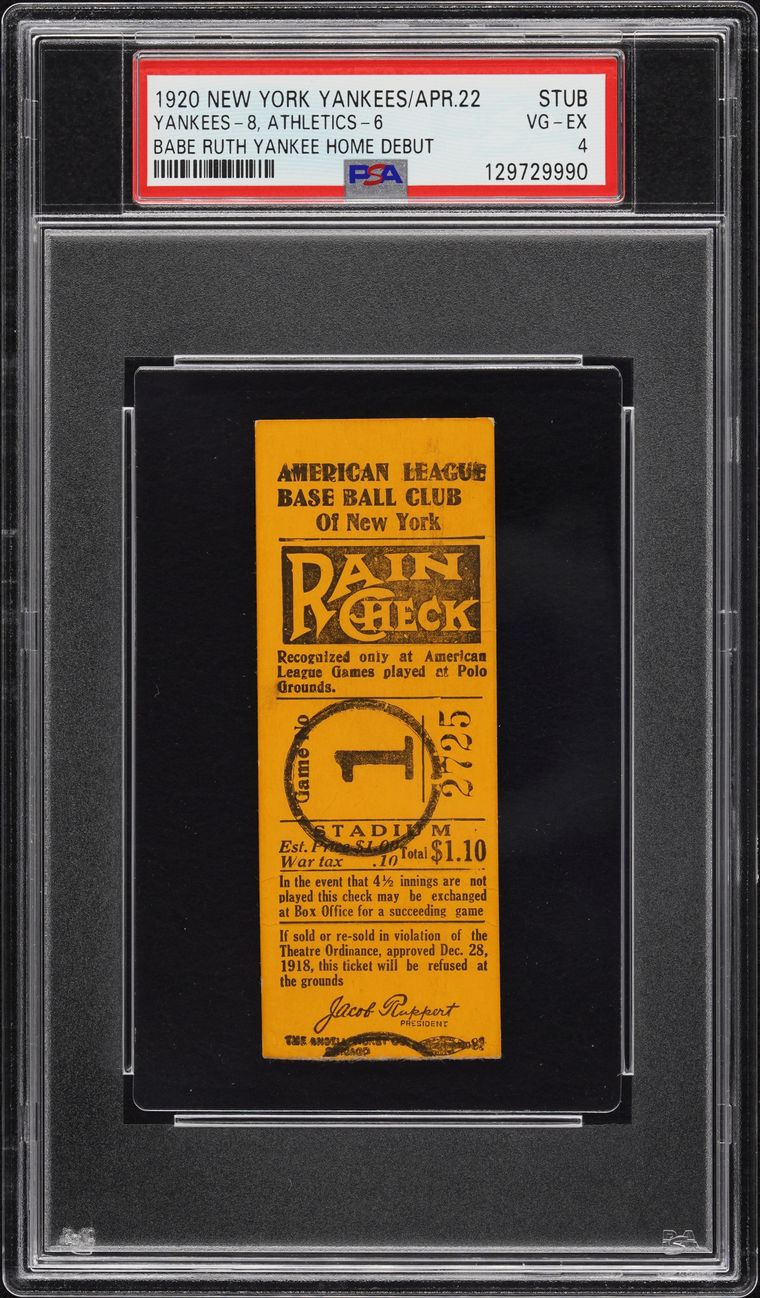
Yes, and reliably more than a recent one. Sort 5,114 graded stub sales by the decade the game was played and the pattern barely wobbles: a 1910s stub brings a middle price of $2,562, a 1950s stub $639, a 1990s stub $330, a 2010s stub $69. Age is the most dependable thing about what a stub is worth. It is also the least interesting.
What each decade actually sells for
Middle price of a graded stub, by decade of the game
| Decade | Sales | Middle | Highest |
|---|---|---|---|
| 1910s | 153 | $2,562 | $58,560 |
| 1920s | 214 | $1,089 | $102,480 |
| 1930s | 319 | $854 | $280,600 |
| 1940s | 230 | $594 | $480,000 |
| 1950s | 598 | $639 | $115,200 |
| 1960s | 570 | $590 | $107,828 |
| 1970s | 703 | $372 | $158,600 |
| 1980s | 866 | $444 | $341,600 |
| 1990s | 916 | $330 | $43,800 |
| 2000s | 481 | $217 | $40,800 |
| 2010s | 64 | $69 | $1,659 |
Read the third column on its own and age looks like the whole story. A stub from before the First World War brings thirty-seven times what a stub from the 2010s brings. That is a real effect and it is not subtle.
Why the old ones hold up
Two things, and neither is about the ticket itself. The first is that almost none of them survived. A ticket was a receipt, it went in a bin on the way out, and the ones still here are the small fraction somebody put in a pocket and forgot about. The second is a filter on top of that: the older the stub, the more likely it survived precisely because the person who kept it thought the day was worth remembering.
You can see the survival rate in the second column. There are 916 recorded sales of 1990s stubs and 153 of 1910s stubs, and that is not because collectors prefer the nineties. There is simply more of it left.
But age is not what pays
Look at the last column instead and the pattern falls apart completely. The oldest decade in the table tops out at $58,560. The 1940s reach $480,000 and the 1980s reach $341,600, and in both cases that is one single game: Jackie Robinson's Major League debut in April 1947, and Michael Jordan's first NBA game in October 1984.
Highest single sale, by decade of the game
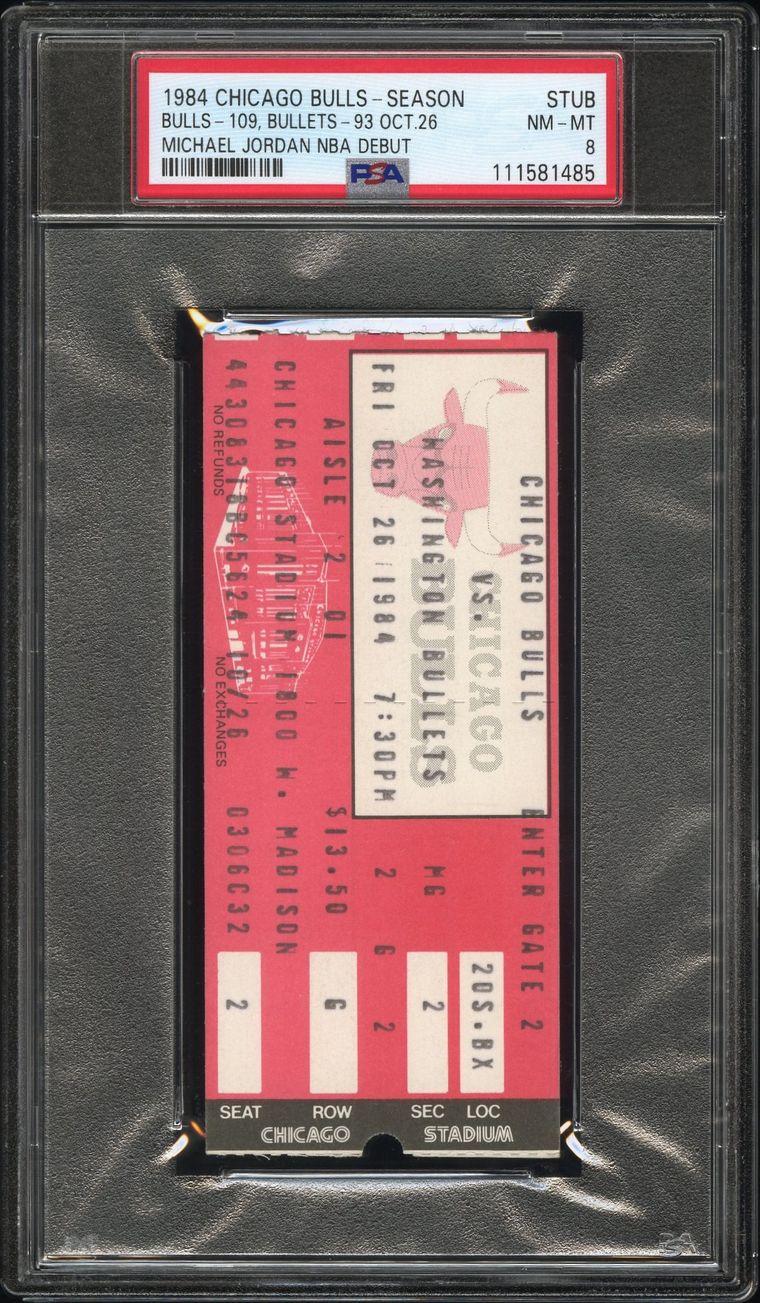
A stub from 1984 outsold every stub from the 1910s we have on record, by almost six times. Age sets the floor under an ordinary ticket. What the game was decides everything above that floor, and that is the difference between a few hundred dollars and six figures.
What that means for the one in your drawer
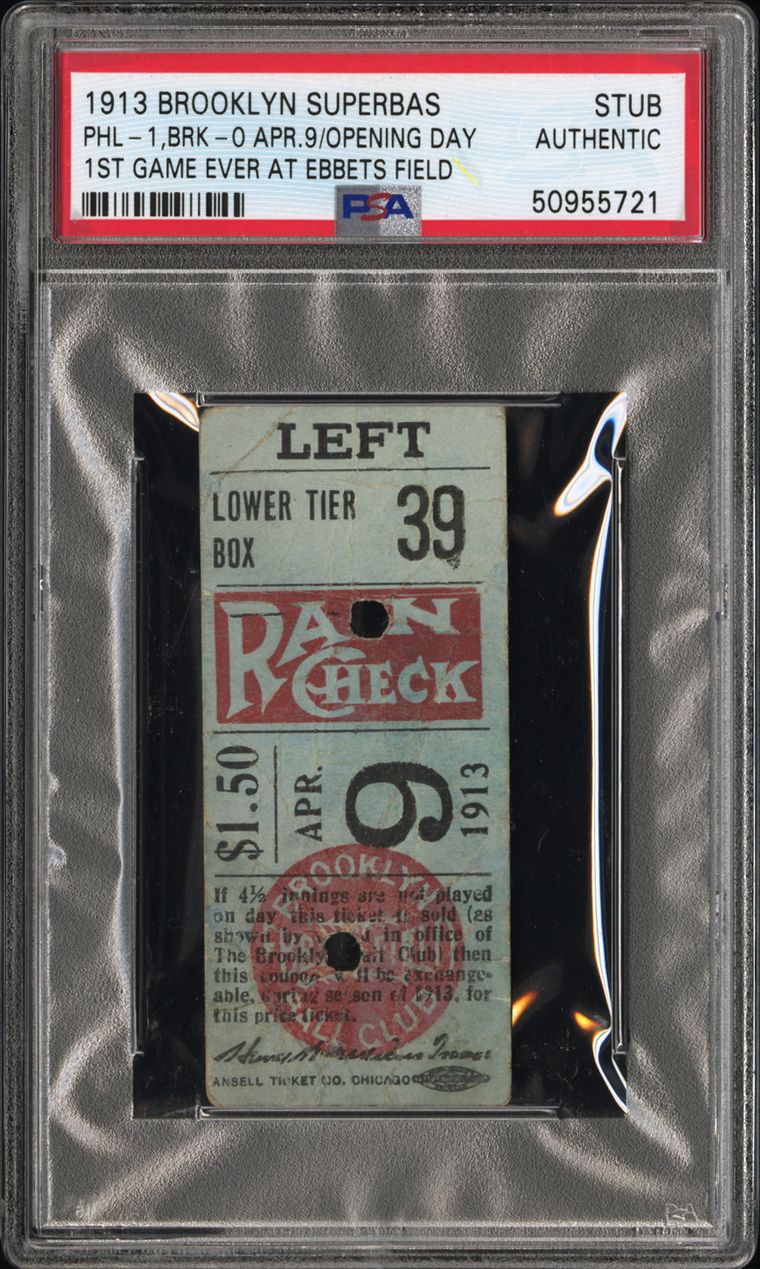
If it is an ordinary game from an ordinary season, age is doing all the work, and the table above is close to the whole answer. A 1930s stub from a Tuesday afternoon is worth a few hundred dollars because it is a 1930s stub, not because of anything that happened.
If something did happen that day, the decade stops mattering almost entirely. That is worth checking before you decide an eighties stub is too recent to bother with. Look up the date printed on the front and see what was played.
Common questions
- Are old ticket stubs worth anything?
- On average, yes, and more than recent ones. The middle price for a graded stub from the 1910s is $2,562, against $330 for one from the 1990s and $69 for one from the 2010s.
- How old does a ticket stub have to be to be valuable?
- There is no threshold. The highest price we have on record is a 1947 stub at $480,000, and the third highest is from 1984. What the game was matters far more than how old it is.
- Why are old ticket stubs rare?
- A ticket was a receipt and was normally thrown away on the way out. The ones that survive were kept by someone who thought the day mattered, which is also why the surviving ones skew towards significant games.
- Is a 1990s ticket stub worth anything?
- Typically a few hundred dollars at most for a graded copy, with a middle price of $330. The exceptions are debuts and record-setting games, which are worth far more regardless of the decade.